
International business moves quickly. Whether expanding into new markets, completing cross-border transactions, responding to regulatory requirements, or securing overseas contracts, organizations often face a common challenge: ensuring their documents are accepted abroad.
While document authentication is a critical step in many international business processes, it can also be one of the most time-consuming and complex. Requirements vary by country, processing times fluctuate, and even minor errors can result in costly delays.
Depending on the destination country, businesses may require apostille services or embassy legalization services to ensure their documents are properly authenticated for international use.
This is why many organizations turn to professional document authentication services to manage the process efficiently and reduce risk.
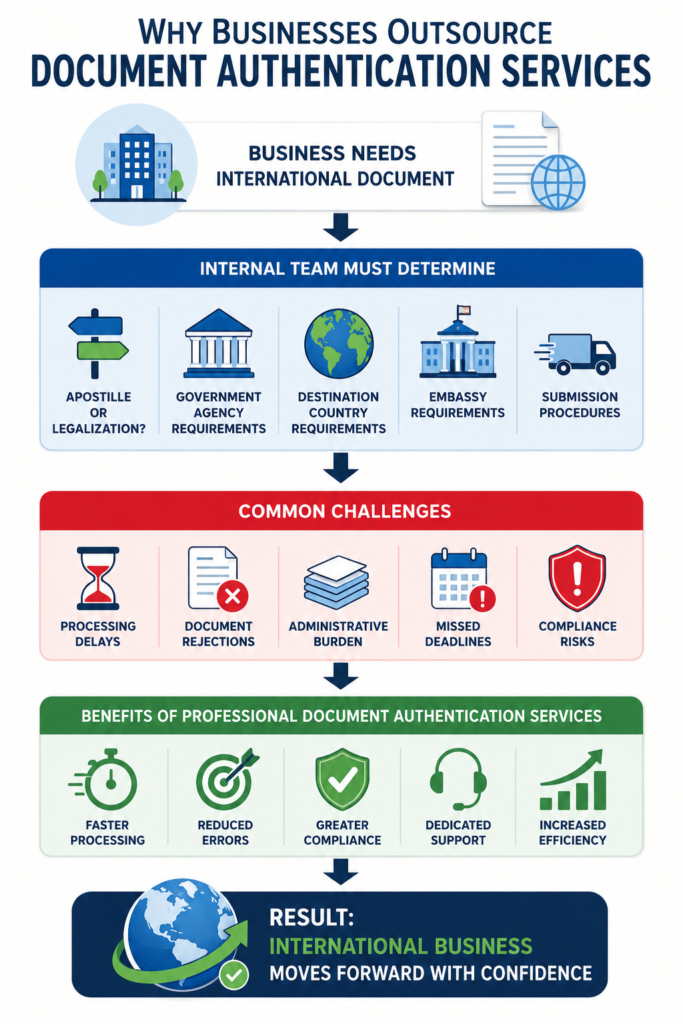
The Hidden Costs of Managing Document Authentication Internally
At first glance, handling document authentication in-house may seem straightforward. However, businesses often underestimate the complexity involved.
Teams must determine:
- Whether an apostille or legalization is required
- Which agencies must process the document
- Country-specific authentication requirements
- Current government processing procedures
- Embassy and consulate requirements
- Submission and courier logistics
For organizations managing multiple documents or operating in several countries, these requirements can quickly consume valuable internal resources.
The result is often delayed projects, frustrated stakeholders, and increased administrative costs.
Why Document Authentication Delays Matter
A delayed document can have a ripple effect throughout an organization.
Authentication issues may impact:
International Market Expansion
Many countries require authenticated corporate documents before a business can register a local entity, establish operations, or obtain licenses.
Because requirements vary globally, businesses should review the specific authentication requirements for the country where their documents will be used before beginning the process.
Contract Execution
International partners and government agencies may require authenticated agreements before transactions can move forward.
Regulatory Compliance
Industries with strict regulatory oversight often depend on properly authenticated documents to meet legal requirements and maintain operational timelines.
Banking and Financial Transactions
Foreign financial institutions frequently require authenticated corporate records before opening accounts or authorizing transactions.
In each case, authentication delays can slow business initiatives and create unnecessary risk.
Common Reasons Documents Are Rejected
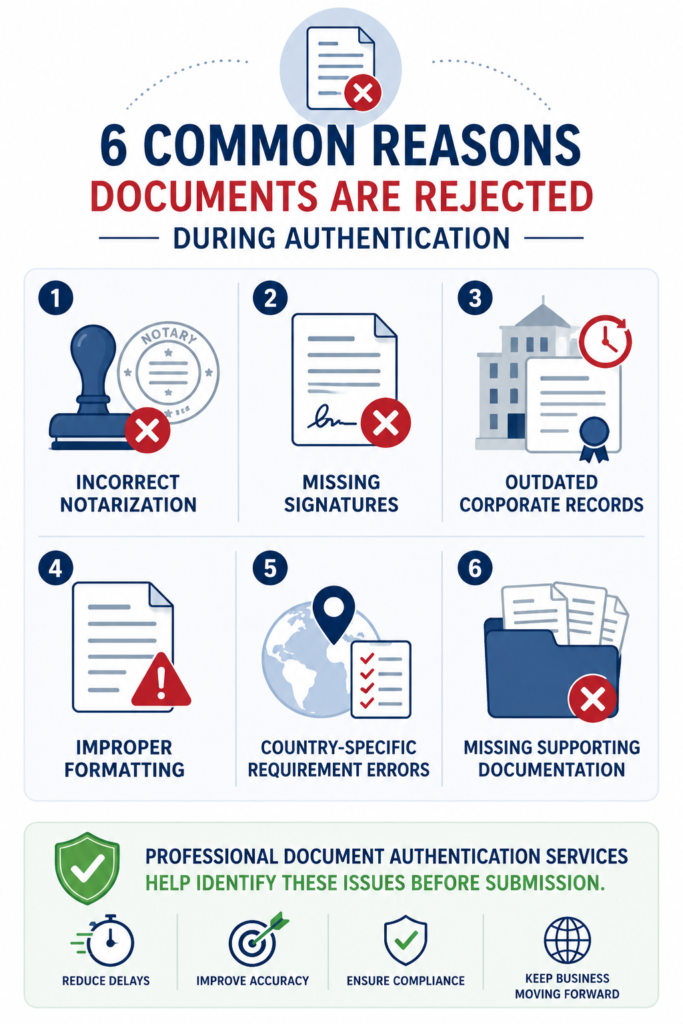
One of the greatest challenges organizations face is document rejection.
Rejections commonly occur because of:
- Incorrect notarization
- Missing signatures
- Outdated corporate records
- Improper document formatting
- Failure to meet country-specific requirements
- Incomplete supporting documentation
When a document is rejected, businesses often need to restart portions of the authentication process, resulting in additional time and expense.
Many of these issues can be avoided by understanding how the authentication process works before documents are submitted for review.
Professional document authentication services help identify potential issues before submission, reducing the likelihood of costly setbacks.
What to Look for in a Document Authentication Service Provider
Not all providers offer the same level of expertise or support.
When evaluating a partner, organizations should consider several key factors.
Experience With Complex International Requirements
Authentication requirements differ significantly by country. Providers with extensive experience can help navigate these variations more effectively.
Strong Government and Embassy Relationships
Efficient document processing often depends on familiarity with agency procedures and changing requirements.
Dedicated Customer Support
Businesses benefit from having a knowledgeable point of contact who can provide updates and answer questions throughout the process.
Proven Track Record
Organizations should look for providers with a long history of successfully handling document authentication projects for corporate clients.
Scalability
As businesses grow internationally, authentication needs often increase. A capable provider should be able to support both individual requests and high-volume projects.
The Business Value of Professional Document Authentication Services
Organizations that partner with experienced document authentication specialists often realize benefits beyond faster processing.
Reduced Administrative Burden
Internal teams spend less time researching requirements, preparing submissions, and tracking document status.
Greater Accuracy
Expert review helps minimize errors that can result in document rejection.
Improved Efficiency
Streamlined workflows allow businesses to keep international projects moving forward.
Increased Confidence
Organizations gain assurance that their documents are being handled according to current requirements and best practices.
Better Resource Allocation
Employees can focus on strategic initiatives rather than administrative document management.
Questions to Ask Before Choosing a Document Authentication Partner
Before selecting a provider, decision-makers should ask:
- How long have you provided document authentication services?
- What types of corporate documents do you regularly process?
- Do you handle both apostille and legalization requirements?
- How do you communicate project updates?
- Can you support large-volume authentication projects?
- What processes do you use to help prevent document rejection?
The answers can reveal whether a provider has the expertise and infrastructure necessary to support long-term business needs.
Why Experience Matters in Document Authentication
Document authentication is more than a procedural task. It is an essential component of international business operations that directly impacts timelines, compliance, and organizational efficiency.
Companies that work with experienced authentication professionals can reduce risk, avoid delays, and navigate complex requirements with greater confidence.
As global business continues to expand, choosing the right document authentication service provider becomes an important strategic decision, one that can help organizations move faster and operate more effectively across international markets.
Partner With a Trusted Document Authentication Provider
Whether your organization requires a single authenticated document or ongoing support for international operations, professional document authentication services can simplify complex processes and help ensure documents are accepted where and when they are needed.
Before beginning the authentication process, businesses should identify the specific document types that require authentication and determine whether they need an apostille or embassy legalization.
The right partner provides more than processing assistance. They provide confidence, efficiency, and expertise that support your global business goals.
Key Takeaways
- Document authentication is a critical requirement for many international business activities, including expansion, compliance, banking, and contract execution.
- Managing document authentication internally can consume significant time and resources, especially when dealing with multiple countries and varying requirements.
- Common document errors, such as incorrect notarization or missing information, can lead to costly delays and rejections.
- Professional document authentication services help businesses reduce risk, improve efficiency, and maintain compliance with international requirements.
- Choosing an experienced provider can streamline the process and help organizations avoid disruptions to important business initiatives.
- A reliable authentication partner allows internal teams to focus on strategic priorities while ensuring documents are processed accurately and efficiently.