

Using a U.S. diploma or academic transcript in another country may require more than simply providing the original document. Depending on the destination country and the requirements of the receiving organization, the document may need to go through an authentication process before it can be accepted for official use.
The appropriate process may involve an apostille or additional authentication and embassy legalization. Understanding these requirements before submitting educational documents can help reduce the risk of errors, rejected documents, and avoidable delays.
Why Do Diplomas and Transcripts Need Authentication?
Educational documents issued in the United States may need authentication before they can be presented to institutions, employers, government agencies, or other authorities abroad. Authentication establishes the certifications necessary for the document to be presented for official use in the destination country.
Diplomas and academic transcripts may require authentication for a variety of international purposes, including:
- Employment
- Higher education
- Professional licensing
- Visa or immigration-related requirements
- Teaching positions
- Other official or administrative purposes
Requirements can vary based on the destination country, the type of educational document, and how the document was issued or prepared. For a broader look at academic records, see this guide to educational documents that may need to be authenticated for use overseas.
What Is Diploma Authentication?
Diploma authentication is the process of obtaining the appropriate certifications so a U.S.-issued diploma can be presented for official use in another country. The process helps establish that the necessary signatures, seals, or certifications associated with the document have been properly authenticated.
There is no single authentication procedure that applies to every diploma or every destination. The appropriate steps depend on factors such as where the diploma originated, how it was prepared, and the country where it will ultimately be presented.
What Is Transcript Authentication?
Transcript authentication follows a similar principle but applies specifically to academic transcripts. These records generally provide an official history of a student’s coursework, grades, credits, or other academic information issued by an educational institution.
The preparation and authentication requirements for a transcript may differ from those that apply to a diploma. Because requirements can depend on the issuing institution, document preparation, and destination country, the correct procedure should be confirmed before the authentication process begins.
Apostille vs. Embassy Legalization for Educational Documents
One of the most important considerations when authenticating a diploma or transcript is determining whether the destination requires an apostille or a different authentication and legalization process. The appropriate route is largely determined by the country where the educational document will be used.
Countries can have different requirements for accepting foreign public documents. Identifying the destination and its status under the Hague Apostille Convention is therefore an important starting point when determining how to authenticate educational records.
Apostille for Diplomas and Transcripts
For documents intended for use in a country participating in the Hague Apostille Convention, an apostille may be the appropriate form of authentication. The apostille facilitates the recognition of qualifying public documents between countries participating in the Convention. The specific requirements still depend on the document and how it was issued or prepared.
Embassy Legalization for Diplomas and Transcripts
When an apostille is not the applicable method for the destination country, additional authentication and legalization steps may be necessary. Depending on the document and destination, this can involve authentication by the appropriate U.S. authorities followed by legalization through the relevant embassy or consulate.
Because the requirements and sequence can vary, it is important to determine the correct procedure before submitting a document.
To help determine which general process may apply, review the list of Hague and non-Hague countries. The destination country’s requirements should still be confirmed for the specific document being submitted.
How Do You Authenticate a Diploma or Transcript for Use Abroad?
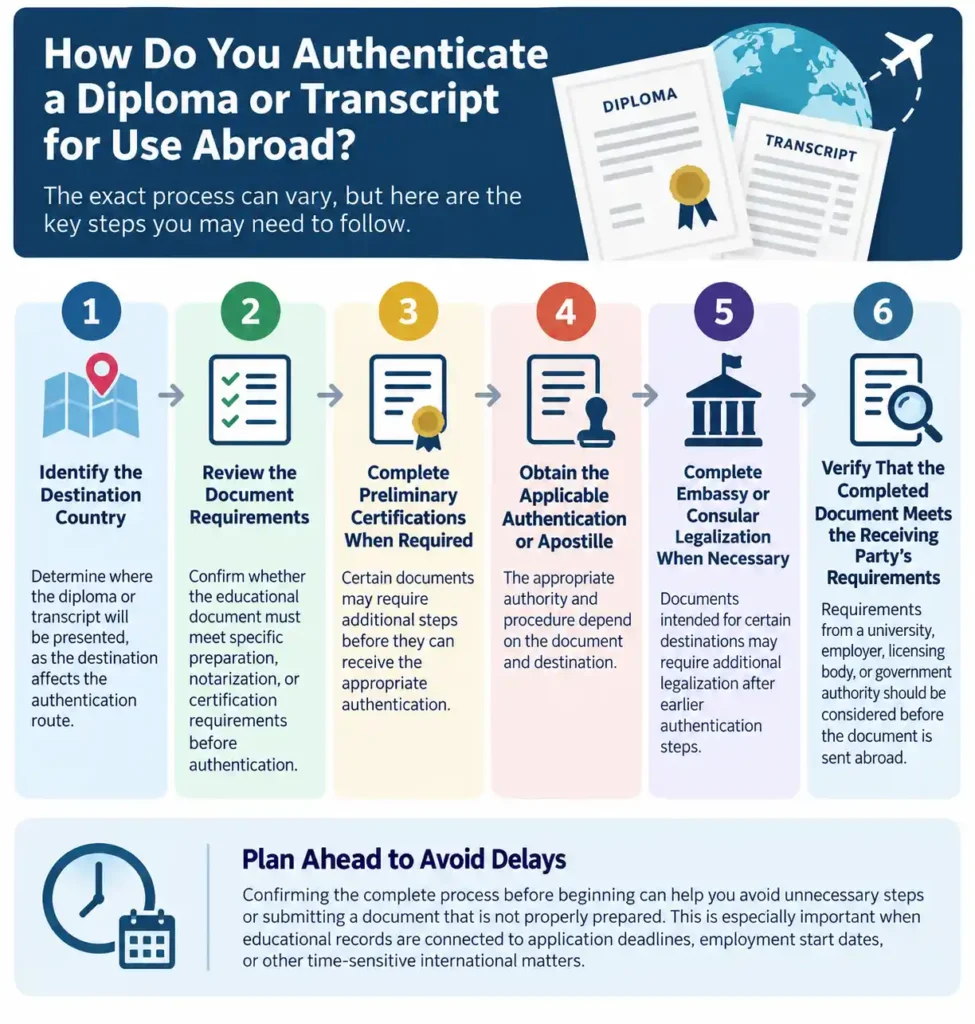
There is no universal process for authenticating every educational document. The necessary steps depend on factors such as the document type, where it originated, how it was issued or prepared, and the country where it will be used.
Although the exact procedure can vary, the authentication process may include the following steps:
- Identify the destination country. Determine where the diploma or transcript will ultimately be presented because the destination affects the authentication route.
- Review the document requirements. Confirm whether the educational document must meet specific preparation, notarization, or certification requirements before authentication.
- Complete preliminary certifications when required. Certain documents may require additional steps before they can receive the appropriate authentication.
- Obtain the applicable authentication or apostille. The appropriate authority and procedure depend on the document and destination.
- Complete embassy or consular legalization when necessary. Documents intended for certain destinations may require additional legalization after earlier authentication steps.
- Verify that the completed document meets the receiving party’s requirements. Requirements from a university, employer, licensing body, or government authority should be considered before the document is sent abroad.
Confirming the complete process before beginning can help avoid completing unnecessary steps or submitting a document that is not properly prepared. This is particularly important when educational records are connected to application deadlines, employment start dates, or other time-sensitive international matters.
What Educational Documents May Need Authentication?
Diplomas and transcripts are common educational records submitted for international use, but other academic documents may also require authentication. The specific documents requested will depend on the receiving organization and the purpose for which the records are being used.
Educational documents that may be involved include:
- College and university diplomas
- Academic transcripts
- Degrees
- Academic certificates
- Letters issued by educational institutions
- Other official academic records
The receiving institution or authority may specify exactly which records must be provided and how they should be prepared. Before beginning authentication, it is helpful to confirm both the document requirements and the authentication requirements for the destination.
Common Diploma and Transcript Authentication Mistakes
Authentication can involve multiple requirements, particularly when educational records are being prepared for use outside the United States. Understanding common problems can make it easier to prepare documents correctly and reduce the likelihood of having to repeat part of the process.
Not Checking the Destination Country First
The destination country plays an important role in determining the appropriate authentication route. Starting the process without confirming where the document will be used can result in pursuing an authentication method that does not meet the destination’s requirements. Checking whether the destination is a Hague or non-Hague country provides an important starting point.
Assuming Every Educational Document Follows the Same Process
A diploma and an academic transcript may originate from the same educational institution, but that does not necessarily mean they have identical preparation requirements. Differences in signatures, notarization, issuance, or certification can affect how a document proceeds through authentication.
Each educational document should therefore be evaluated individually before processing begins. This can be particularly important when several academic records are being submitted together for the same international purpose.
Starting Without Confirming Document Requirements
Incorrect document preparation can create delays later in the authentication process. A document that does not meet an applicable requirement may need to be corrected or prepared again before authentication can continue.
It is also important to consider the requirements of the organization receiving the document abroad. The authentication process and the receiving organization’s submission requirements are related considerations, but they are not necessarily the same.
How Long Does Diploma or Transcript Authentication Take?
The time required to authenticate a diploma or transcript varies according to the document and the steps involved. Processing may be affected by the type of educational record, the required authentication route, the destination country, and the government or diplomatic authorities involved.
Documents requiring several stages of authentication and legalization may take longer than documents eligible for a more direct process. When an academic record is needed for an application, employment opportunity, licensing requirement, or another deadline, allowing sufficient time for the process can help reduce complications.
Preparing Educational Documents for International Use
Preparation should begin by identifying exactly which educational records the receiving organization requires and where those records will be used. This information helps establish whether authentication is necessary and which general process may apply.
It is equally important to review the requirements before altering, notarizing, or submitting an original educational document. Confirming the process in advance can help protect important records while reducing the possibility of completing unnecessary or incorrect authentication steps.
Getting Help With Diploma and Transcript Authentication
Diploma and transcript authentication can become complicated when requirements involve different authorities, document preparation standards, or country-specific procedures. Washington Consular Services (WCS) has more than 40 years of experience helping clients navigate document authentication for international use and can assist in determining the appropriate process based on the document and destination.
Depending on the destination and applicable requirements, educational records may need an apostille or an embassy legalization process. WCS can help manage the required authentication steps so documents are properly prepared for their intended international use.
Key Takeaways
- Diploma and transcript authentication may be required when U.S. educational records are used for official purposes in another country.
- Authentication requirements depend on factors such as the destination country, document type, issuing institution, and document preparation.
- Documents intended for Hague Convention countries may qualify for an apostille, while other destinations may require additional authentication and embassy or consular legalization.
- Diplomas and transcripts should be evaluated individually because different educational records may have different preparation requirements.
- Confirming the destination country’s requirements and the receiving organization’s requirements before beginning can help prevent errors and delays.
- Authentication timelines can vary depending on the number of authorities and processing stages involved.
- WCS can assist with determining and managing the appropriate authentication process for educational documents intended for international use.