

When conducting business internationally, document authentication is often a critical step in ensuring that corporate documents are recognized by foreign governments, agencies, and institutions.
Many companies underestimate the complexity of the authentication process, resulting in unexpected delays that can disrupt business operations, postpone transactions, and increase costs.
Whether you need apostilles or consular legalizations for commercial documents, powers of attorney, certificates of incorporation, or other corporate records, understanding the most common causes of delays can help you avoid setbacks and keep your international projects moving forward.
Why Document Authentication Delays Matter
Document authentication is often tied to time-sensitive business activities, including foreign market expansion, international trade, business registration, and contract execution. A delay at any stage of the authentication process can create a ripple effect across multiple departments and stakeholders.
By identifying potential obstacles early, businesses can reduce risk and improve turnaround times.
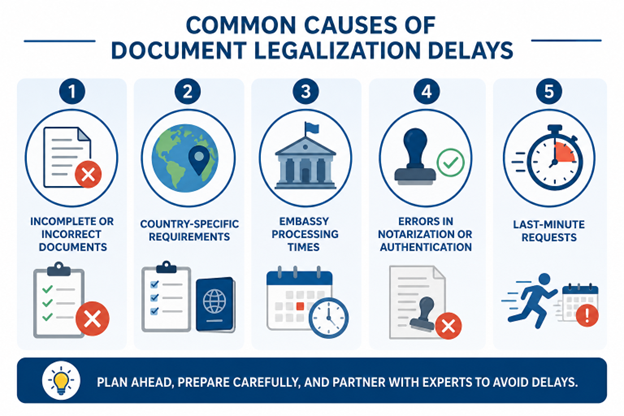
Common Causes of Document Authentication Delays
Incomplete or Incorrect Documents
One of the most frequent reasons for delays is submitting documents that do not meet authentication requirements. Missing signatures, incorrect notarizations, outdated certificates, or incomplete information can result in rejected applications and additional processing time.
Before submitting documents for authentication, verify that all required information is accurate and that supporting documentation is included.
Country-Specific Requirements
Authentication requirements vary by destination country. Depending on where the document will be used, the process may require an apostille, consular legalization, additional certifications, embassy review, or supporting documentation before the document can be accepted.
Failing to account for country-specific requirements can lead to unexpected delays and resubmissions. Businesses should confirm the latest requirements before beginning the process.
Embassy Processing Times
For documents requiring consular legalization, embassies and consulates maintain their own processing schedules, procedures, and workload capacities. During peak periods, processing times may increase significantly.
Since embassy timelines are often outside the applicant’s control, planning ahead is essential when preparing documents for international use.
Errors in Notarization or Authentication
Many documents must pass through multiple stages before they are ready for international use. If a document is improperly notarized or authenticated at an earlier stage, it may be rejected later in the process.
Ensuring each step is completed correctly helps prevent delays and unnecessary rework.
Last-Minute Requests
Businesses sometimes wait until a transaction, shipment, or registration deadline is approaching before starting the authentication process. This leaves little room for unexpected complications.
Starting the process early provides greater flexibility and reduces the risk of missing critical deadlines.
How Businesses Can Avoid Document Authentication Delays
Understand Requirements Before You Begin
Gather information about the destination country’s authentication requirements before preparing documents. Knowing whether a document needs an apostille, consular legalization, or additional supporting materials can help prevent avoidable setbacks.
Review Documents Carefully
Double-check names, dates, signatures, seals, notarizations, and supporting documentation before submission. Small errors can create significant delays later in the process.
Build Additional Time Into Project Plans
International document authentication can involve multiple parties, including notaries, government agencies, and foreign embassies or consulates. Building extra time into project schedules helps accommodate unforeseen delays.
Work With an Experienced Document Authentication Provider
Managing the authentication process internally can be time-consuming, especially when dealing with multiple countries or complex document requirements. An experienced provider can help identify potential issues before submission, navigate country-specific requirements, and streamline the process from start to finish.
How to Avoid Delays in Document Authentication, Apostilles, and Legalizations
Check the Timetable as You Complete Your Order
Remember that the timetable starts when the document is received, not when the order is placed. Please do not delay sending the document to our office. For documents that do not require a hard copy and only need a digital upload, the process moves more quickly.
Comply With Country-Specific Requirements
Requirements may vary. It saves time and money to comply with supporting document requirements and proper notarization procedures, which can differ from country to country and among document types.
Prioritize and Get Started
The missing link in global trade and travel is often the authentication of documents. Leaving the process until the last minute inevitably causes costly delays.
The Value of Professional Document Authentication Services
For companies that regularly conduct international business, document authentication is too important to leave to chance. Working with a trusted provider can help reduce administrative burdens, improve accuracy, and minimize delays that could impact business operations.
With more than 40 years of experience and over 500,000 documents successfully authenticated, Washington Consular Services helps businesses navigate document authentication requirements efficiently and confidently, whether their documents require apostilles or consular legalizations.
Key Takeaways
- Document authentication is the umbrella term for both apostilles and legalizations, also known as consular legalizations.
- Document authentication delays can disrupt international business operations, transactions, and compliance efforts.
- Incomplete documentation and incorrect notarization are among the most common causes of processing delays.
- Authentication requirements vary by country, making it essential to verify destination-specific requirements before submitting documents.
- Embassy and consular processing times can fluctuate based on workload, holidays, and procedural changes.
- Starting the authentication process early can help businesses avoid missed deadlines and costly setbacks.
- Working with an experienced document authentication provider can reduce errors, streamline processing, and improve turnaround times.
- Proper planning and document preparation are the most effective ways to ensure a smooth authentication process.